Bromate-Free Flour for Foodservice: What Operators Need to Know
Bromate-Free Flour for Foodservice: What Operators Need to Know

The End of Bromate: What It Really Means for Flour, Dough, and the Future of Baking

Potassium bromate has quietly defined the performance standard for flour, especially in the United States. It makes dough stronger, more forgiving, and easier to scale.

Now that bromate is being phased out or restricted due to health concerns, the industry is facing a reality that many underestimated:

Bromate wasn’t just an additive – it was a compensation system.

And replacing that system is far more complex than removing a line item from a formula. Without it, the true differences in flour quality, milling, and formulation are being exposed.

Understanding Bromate at a Molecular Level

At its core, dough performance comes down to gluten structure. To understand the impact of the removal of bromate, we need to start with gluten chemistry.

Gluten is formed primarily from two proteins: gliadin (extensibility) and glutenin (strength). These proteins contain sulfhydryl groups (-SH), which can be oxidized to form disulfide bonds (-S-S-) – the backbone of a strong dough network.

When Oxidation Occurs

  • Hydrogen is removed
  • Sulfur atoms bond together
  • A stronger, more elastic gluten matrix forms

This transformation is what allows dough to:

  • Retain gas
  • Expand during fermentation
  • Hold structure during baking

Bromate’s role was to control this reaction over time.

What Made Bromate So Effective

Not all oxidizers behave the same – and this is where bromate is uniquely powerful.

Bromate is a late-stage oxidizer, meaning:

  • It activates slowly after hydration
  • It releases oxygen gradually
  • It strengthens gluten progressively during fermentation

This timing is critical.

It allows dough to:

  1. Expand first (as gas develops)
  2. Strengthen later (to hold that expansion)

The result is a dough that is:

  • Elastic but not tight
  • Strong but still extensible
  • Highly tolerant of variation in process

It also explains why bromated flour was so forgiving. Whether in a high-volume bakery or a less controlled environment, it consistently delivered results.

Why Replacing Bromate Isn’t Straightforward

With bromate gone, mills have turned to alternatives like:

  • Ascorbic acid (vitamin C)
  • Enzyme systems (amylases, oxidases, etc.)
  • Chemical conditioners

But these operate on a completely different timeline and fundamentally change the system.

Early Oxidation vs Late Oxidation

Ascorbic acid and many enzyme systems are early oxidizers:

  • They react within minutes of mixing
  • They rapidly form disulfide bonds
  • They “lock in” dough structure almost immediately

From a chemistry standpoint, this creates a problem.

Instead of allowing gradual gluten development:

  • The network becomes fully tightened too early
  • Gas expansion is restricted
  • Dough becomes rigid or overly elastic

In long fermentation – especially the 24-72 hour cycles common in modern pizza making – this can result in dough that feels:

  • Dense
  • Tight
  • Resistant to shaping

In other words, the structure is built before the dough has had time to develop.

The Hidden Challenge: Consistency

Enzymes themselves add another layer of complexity:

  • They are temperature-sensitive (optimal around 24-26°C)
  • Their activity drops in cold fermentation
  • Their interaction depends on particle size and starch damage

If flour isn’t milled with precision:

  • Enzymes act unevenly
  • Fine particles are over-processed
  • Coarser particles are under-processed

The Real Shift: From Forgiveness to Precision

Without bromate, flour is no longer a safety net.

Bakers now have to compensate for:

  • Less forgiving dough
  • Narrower margins for error
  • Greater sensitivity to time, temperature, and mixing

This is why many operators are already experiencing:

  • Increased variability
  • More frequent dough failures
  • Greater reliance on technical skill

In short, the margin for error has narrowed.

The Caputo Model – and a Different Philosophy

While much of the industry is now trying to replace bromate with new systems, Caputo represents a completely different philosophy – one that never depended on it in the first place.

The Caputo Model is built on three pillars:

  • Wheat selection
  • Milling precision
  • Zero reliance on additives – no bromate, no conditioners, no enzymes

Why Caputo Performs Differently

The most misunderstood aspect of flour performance is milling. At Caputo, milling is not just a step – it is the foundation.

Caputo’s approach is fundamentally different because it addresses performance at the source, not after the fact.

Slow Milling, By Design

Caputo uses a slow, controlled milling process designed to:

  • Preserve starch integrity
  • Maintain protein structure
  • Avoid excessive starch damage

This is critical because damaged starch and inconsistent particles directly affect:

  • Water absorption
  • Enzyme activity
  • Fermentation behavior

Fast, high-output milling – common in many systems – prioritizes efficiency, but sacrifices control.

Caputo does the opposite.

1. Strength Comes from Wheat, Not Additives

Perhaps the most defining aspect of the Caputo Model is this:

Everything starts with wheat – and ends there.

Instead of relying on oxidizers, Caputo develops flour performance through:

  • Careful selection of wheat varieties
  • Balancing protein quality (not just quantity)
  • Blending at the kernel level before milling

This creates a gluten network that naturally develops over time – without forced oxidation.

It eliminates the need for:

  • Microdosing
  • Post-milling correction
  • Complex additive systems

And more importantly, it creates a dough that behaves naturally.

2. Granulation Consistency

One of the most overlooked advantages is how Caputo blends.

Rather than blending finished flours or micro-ingredients:

  • Caputo blends wheat kernels before milling

This ensures:

  • Homogeneous composition
  • Uniform particle behavior
  • Consistent hydration and fermentation response

Granulation consistency – the precise distribution of particle sizes in the flour, is where many modern systems struggle:

  • Fine particles hydrate quickly and react aggressively
  • Coarse particles hydrate slowly and react less

When granulation is inconsistent:

  • Dough develops unevenly
  • Additives and enzymes act unpredictably
  • Results vary from batch to batch

Caputo’s level of control is not easy to replicate – it requires:

  • Specialized mill design
  • Process discipline
  • Decades of refinement

3. A Natural Development Curve

Because Caputo flour isn’t driven by early oxidizers:

  • Gluten develops gradually
  • Dough remains extensible throughout fermentation
  • Gas expansion happens naturally, without resistance

This closely mirrors the functional benefits that bromate once provided – but without the chemical dependency.

4. Built for Modern Fermentation

Today’s operators increasingly rely on:

  • Cold fermentation
  • 24-48 hour dough cycles
  • Flexible production schedules

Caputo flour is inherently suited to this:

  • No reliance on temperature-sensitive enzyme activation
  • Stable performance across fermentation timelines
  • Consistent results without reformulation

The Future of Flour Is Not Additive-Driven

The industry is at a turning point.

The removal of bromate has exposed a key truth: you can’t fully replicate time-based gluten development with instant chemical reactions.

Some mills will adapt through increasingly complex additive systems. Others will struggle with consistency.

But the long-term direction is clear:

  • Less dependence on chemical correction
  • Greater emphasis on raw material quality
  • More sophisticated milling and blending practices

Final Thought

Bromate made flour easier to use, but it also masked underlying variability. Now that it’s gone, the difference between flours is no longer hidden.

And in that environment, the mills that lead won’t be the ones trying to recreate the past – they’ll be the ones who never relied on it in the first place.

That’s where Caputo stands.

Bromate-Free Flour for Foodservice: What Operators Need to Know

Bromate-Free Flour for Foodservice: What Operators Need to Know

As potassium bromate is phased out, foodservice operators must understand how flour performance changes. This article explains why bromate once made dough more forgiving and how Caputo’s additive-free approach relies on wheat selection, milling precision, and natural gluten development.

read more
Make Olive Oil Your Daily Ritual

Make Olive Oil Your Daily Ritual

Choosing a high-quality extra virgin olive oil like Olitalia’s can elevate your wellness routine – from better nutrition to richer flavor. Skip the supermarket guesswork and opt for purity you can taste in every pour.

read more
Burrata is Booming

Burrata is Booming

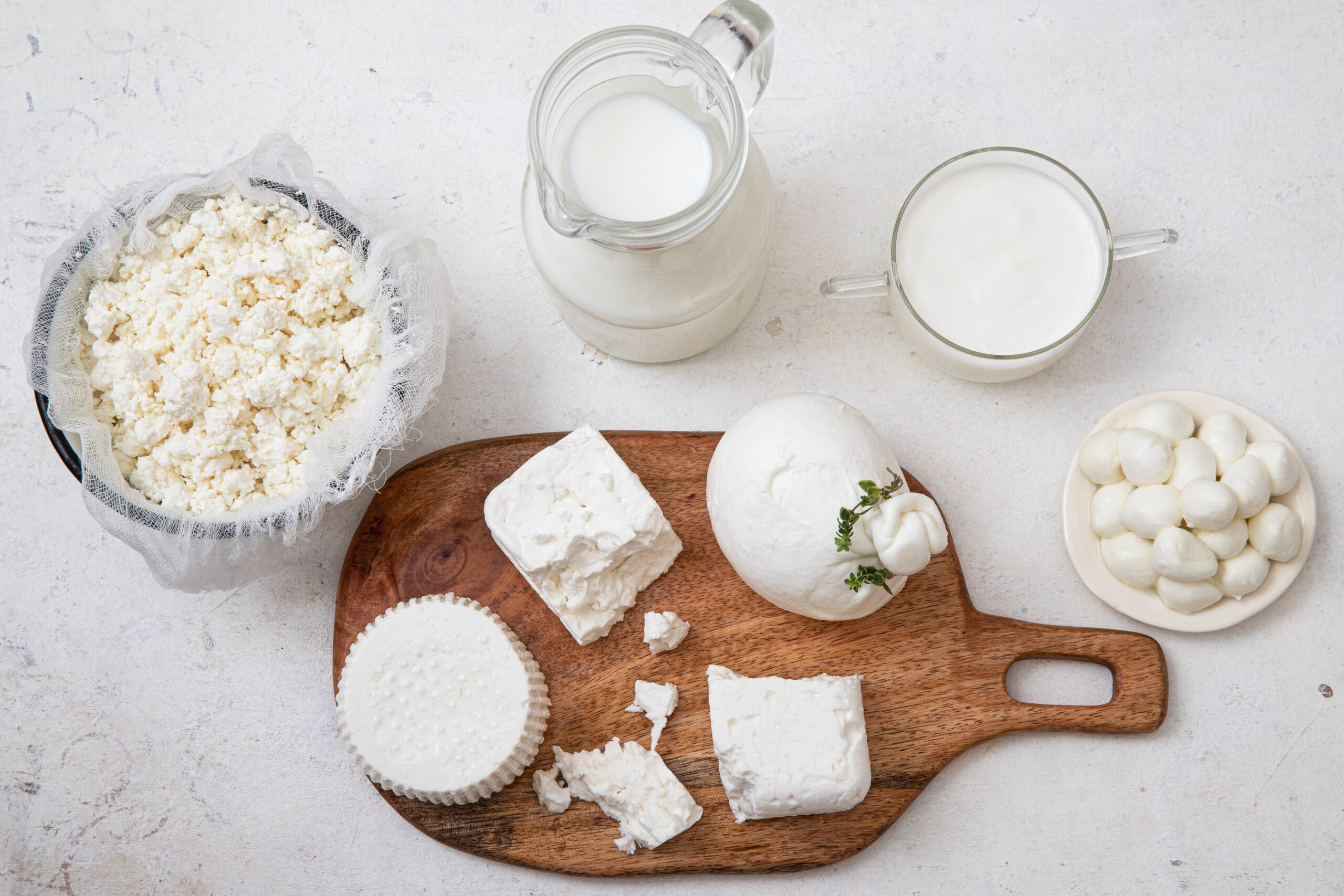
Burrata is taking American menus by storm, with a 30% rise in restaurant features over the last four years. But what makes this creamy Italian cheese so special—and how can chefs plate it beautifully, pair it creatively, and source it without compromising on authenticity? In this guide, we break down how to elevate Burrata beyond the basics. Get insider sourcing details on Deliziosa Burrata, the award-winning cheese crafted in the heart of Puglia and optimized for foodservice kitchens in the US.

read more
Caputo’s Blue Bag or Red Bag?

Caputo’s Blue Bag or Red Bag?

Caputo’s red and blue “00” flours differ in protein and purpose. Learn which is best for pizza, bread, or long fermentation baking at home or in a pizzeria.

read more
Semola vs. Semolina

Semola vs. Semolina

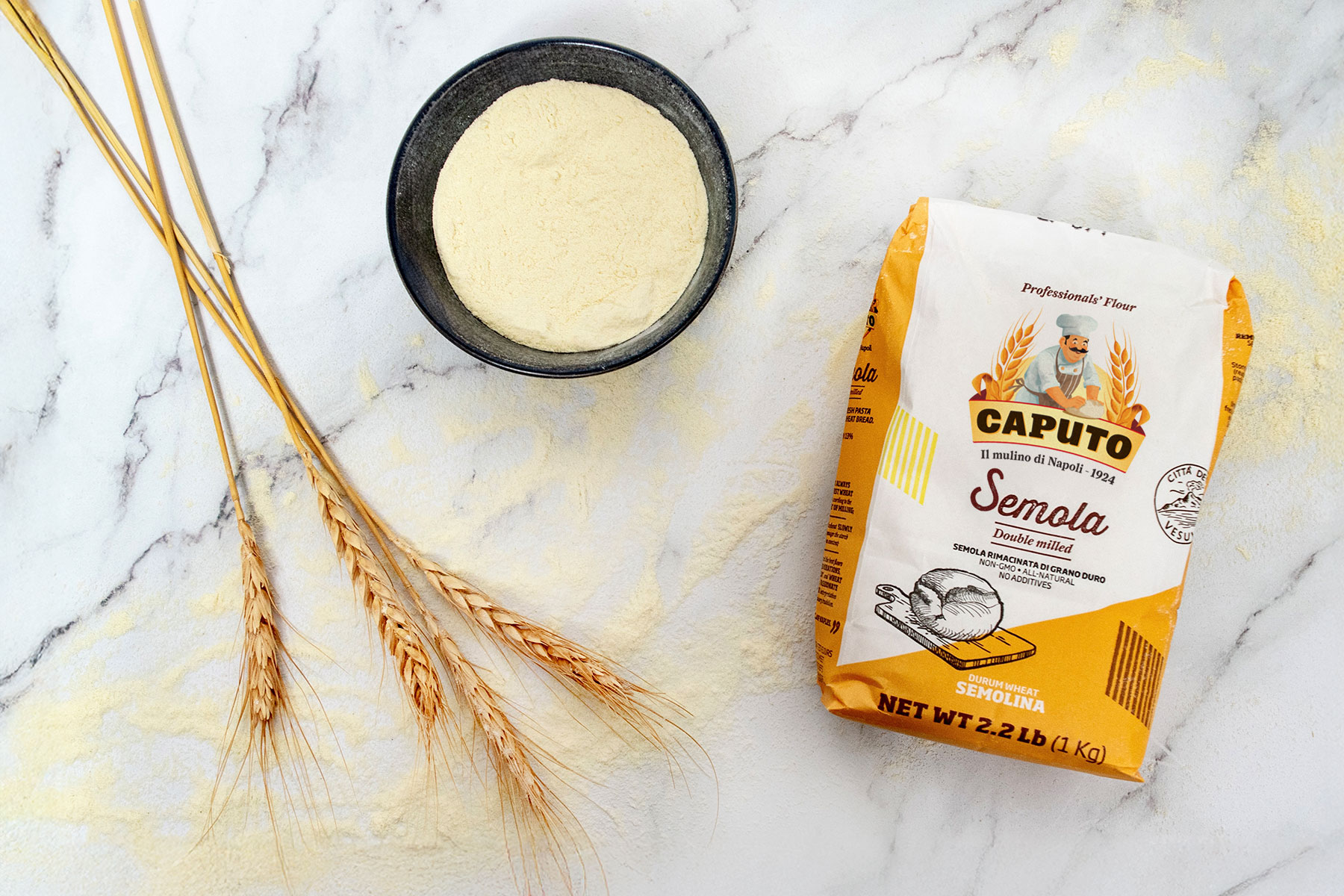
Semola vs. Semolina: What’s the Difference? Learn how this durum wheat flour varies in texture, use, and best applications in pasta, bread, and more.

read more
Loading...