
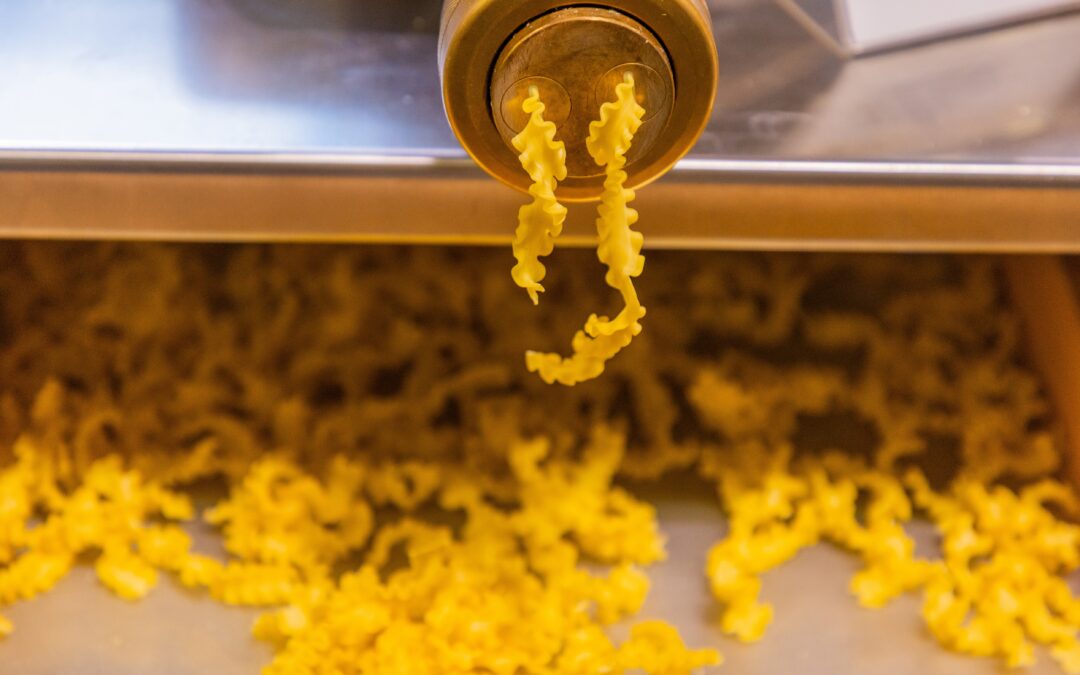
Mastering Extruded Pasta: Flour, Hydration & Building the Perfect Dough
To make successful extruded pasta, you only need two simple components: flour and hydration (water or eggs). Yet the relationship between those two components determines everything—from how the dough extrudes and holds its shape to how the finished pasta performs while cooking.
Not all flour absorbs liquid the same way. That’s why understanding both flour selection and hydration levels is essential when working with a pasta extruder.
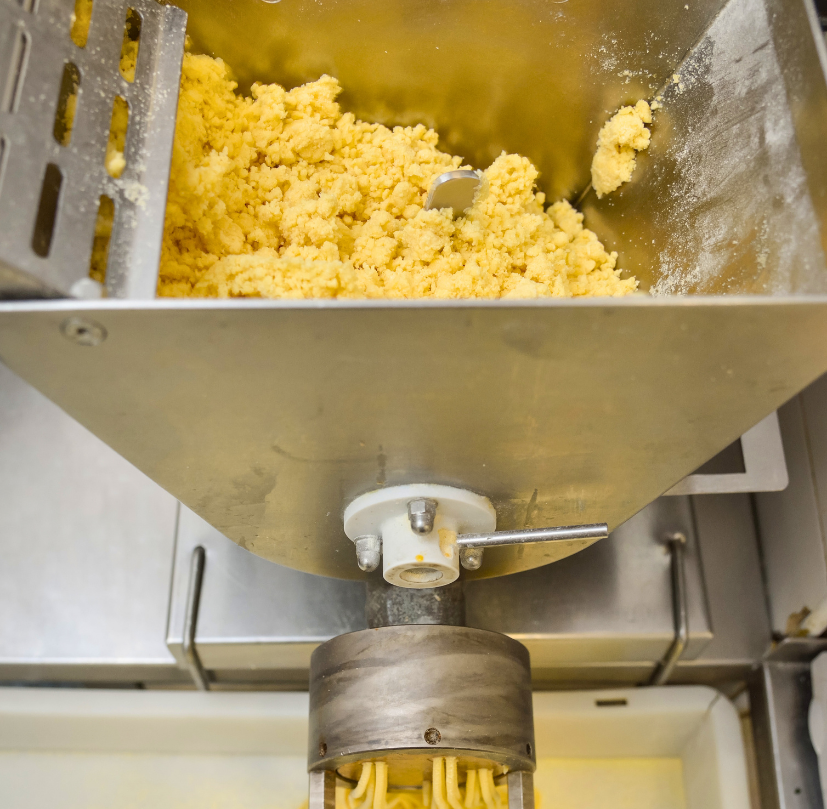
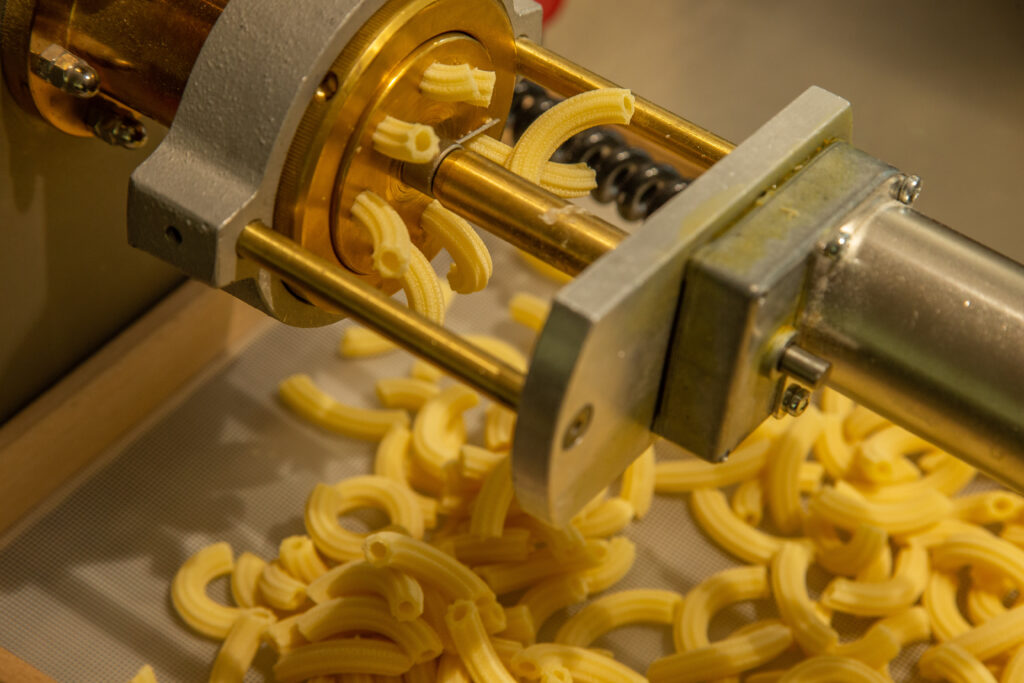
Unlike laminated pasta, extruded pasta dough should feel dry, crumbly, and almost under-hydrated. During extrusion, the machine compresses the dough and transforms those small, hydrated granules into beautifully formed pasta shapes with exceptional texture and structure.
If you’ve ever battled dough that crumbles, sticks, or performs differently from batch to batch, mastering flour selection and hydration is the key to producing consistent, high-quality pasta.
Hydration 101
Hydration is simply the amount of liquid compared to the total flour weight.
Liquid Weight ÷ Flour Weight × 100 = Hydration Percentage
Every flour behaves differently, and hydration levels can vary based on several factors:
- Flour type
- Room humidity
- Pasta shape
- Extruder design
- Mixing time
- Egg versus water-based formulas
With so many variables to consider, where do you begin?
It Starts with the Flour
Before you can understand hydration, you need to understand the flour.
Traditional Italian pasta flour generally falls into two categories: finely milled 00 flour and durum wheat semolina. Both have earned their place in pasta making and can produce exceptional results when paired with the proper hydration.
Specific to Caputo, 00 Pasta Fresca Flour is milled from the heart of the wheat. It’s an exceptionally fine soft wheat that creates doughs with outstanding elasticity, a delicate texture, and a clean wheat flavor. It’s the kind of flour that produces pasta worthy of a call to your nonna.
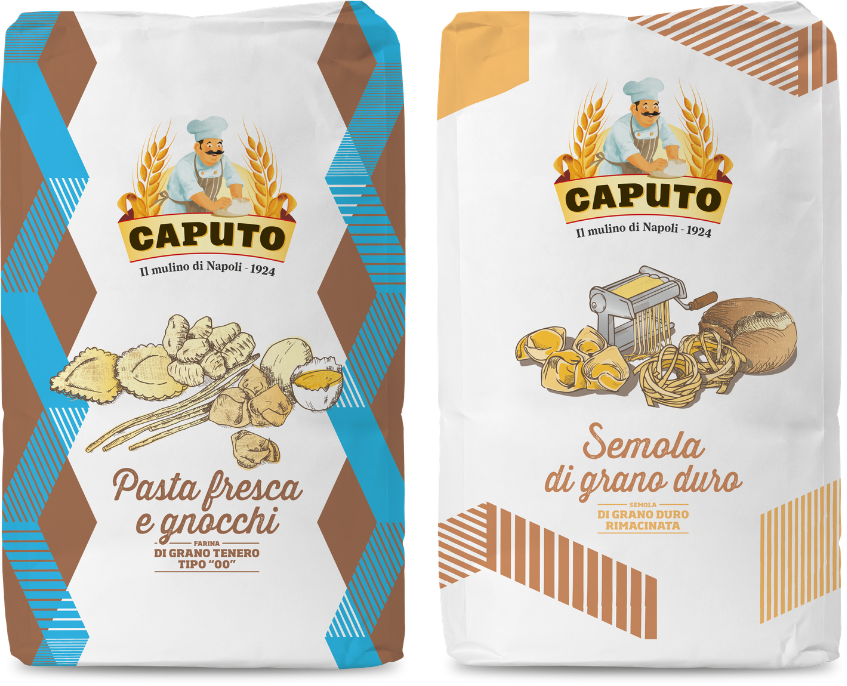
Caputo Semola Rimacinata is produced exclusively from durum wheat and milled twice—a process known as rimacinata. Durum wheat is also a type of hard wheat that is often more forgiving in pasta extrusion thanks to its faster hydration, excellent structure, and ability to perform across a wide range of pasta shapes.
Depending on the shape you’re producing and the final dish you’re creating, you can choose one flour, the other, or a blend of both. You can then use either water or eggs as your source of hydration.
Choosing the Right Flour for Your Menu
One of the best ways to select a flour is to start with the pasta shape and work backward.
Take rigatoni, for example. This short tubular shape, with its ridges and hollow center, is designed to capture rich, hearty sauces. For this application, Caputo Semola Rimacinata paired with water is often the ideal choice. Semolina creates pasta with a firm bite, rustic texture, and exceptional durability during cooking.
On the other hand, if you’re using your pasta extruder to create sheets for ravioli or pasta intended for hand filling, you’ll likely find greater success using Caputo Pasta Fresca and whole eggs. The added richness and elasticity help create a more delicate finished product.
Looking for the most versatile formula? Consider blending the two.
A 75/25 blend of Caputo Pasta Fresca and Caputo Semola Rimacinata, hydrated with water, creates an excellent balance of protein, elasticity, texture, and versatility. It’s a dependable formula that performs well across a wide variety of pasta shapes and menu applications.
Test for Success
The key is to start somewhere and test.
Factors like room humidity, pasta shape, and equipment all influence the final result. Because of this, there is no single “perfect” extruded pasta formula—only the formula that works best for your operation.
One of the most consistent variables you can control is mixing time and dough texture.
Extruded pasta performs best when mixed for at least 10 minutes. The flour needs sufficient time to fully absorb the liquid and hydrate evenly. For even better results, allow the dough to rest briefly before extrusion.
When evaluating your dough, focus on texture.
The ideal extruded pasta dough should look more like damp sand than bread dough.
If it looks like you can knead it into a smooth ball, it’s probably too wet.
Formula Reference
Use these hydration percentages as a starting point for recipe development:
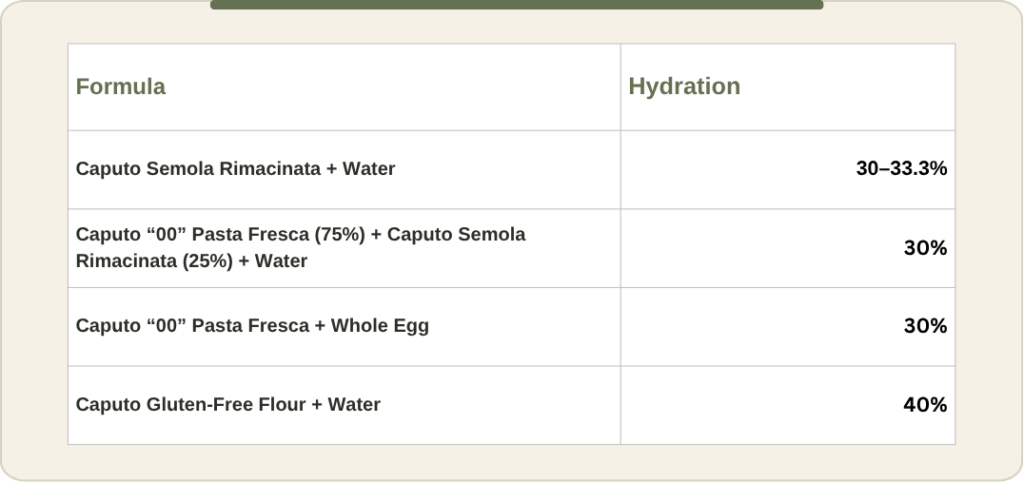
Remember, hydration percentages are guidelines, not rules.
Different flours, room conditions, pasta shapes, and extrusion dies may require small adjustments to achieve optimal results.
Make Perfect Extruded Pasta Every Time
Extruded pasta rewards consistency.
By using high-quality Italian flour and understanding how hydration affects dough development, operators can produce exceptional pasta with repeatable results every day.
Start with proven formulas, adjust for your environment, and make small changes one variable at a time. Before long, you’ll have a reliable process that delivers outstanding texture, appearance, and cooking performance across every pasta shape you produce.
Having trouble with extruding pasta? Check out our article on troubleshooting, drying, and storing extruded pasta.