
Extruded Pasta Dough: Troubleshooting, Drying & Storing
Making extruded pasta is part science, part craft, and a whole lot of observation.
If you’ve already mastered flour selection and hydration, you’re well on your way to producing exceptional pasta. But even when you follow a recipe perfectly, variables like humidity, mixing time, and equipment can impact your final result.
In this guide, we’ll walk through common dough issues, how to troubleshoot them, and the best practices for drying and storing extruded pasta, so it’s ready for service whenever you need it.
What Good Dough Looks Like
Before troubleshooting your dough, it’s important to understand what you’re aiming for.
Properly mixed extruded pasta dough should resemble damp sand or coarse breadcrumbs. It should hold together when compressed in your hand but easily break apart when disturbed.
A common mistake is assuming pasta dough should resemble bread dough. In reality, dough that is smooth, elastic, or easy to knead is often too wet for successful extrusion.
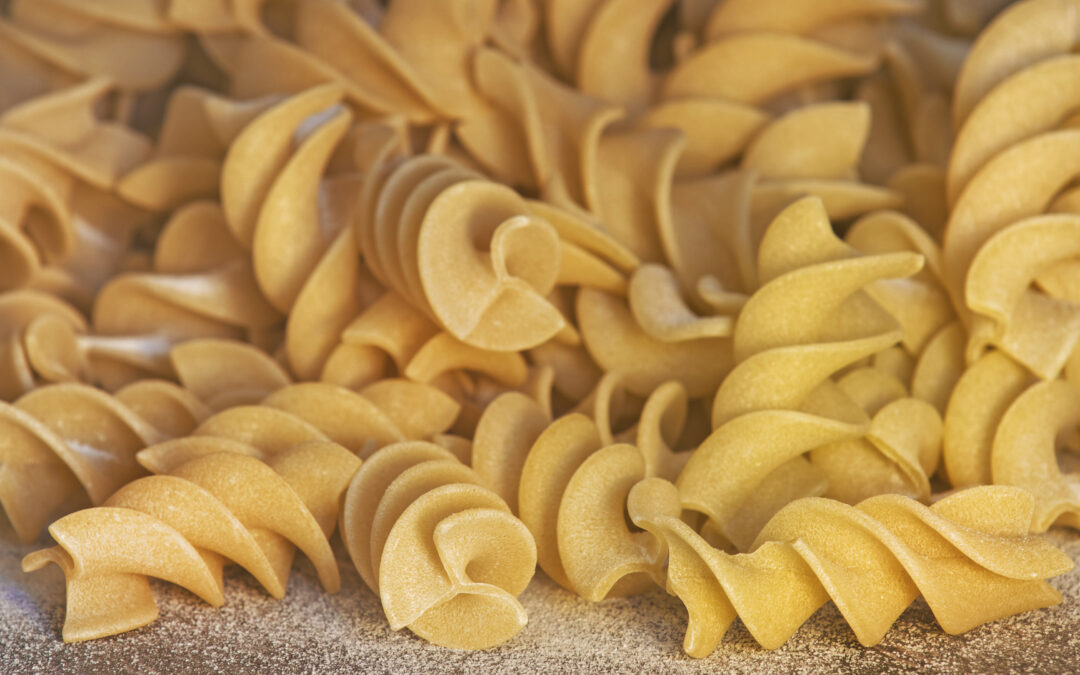
When extruded properly, pasta should emerge from the die with:
- Clean edges
- Consistent shape
- Defined ridges and surface texture
- Minimal sticking
- Uniform color and appearance
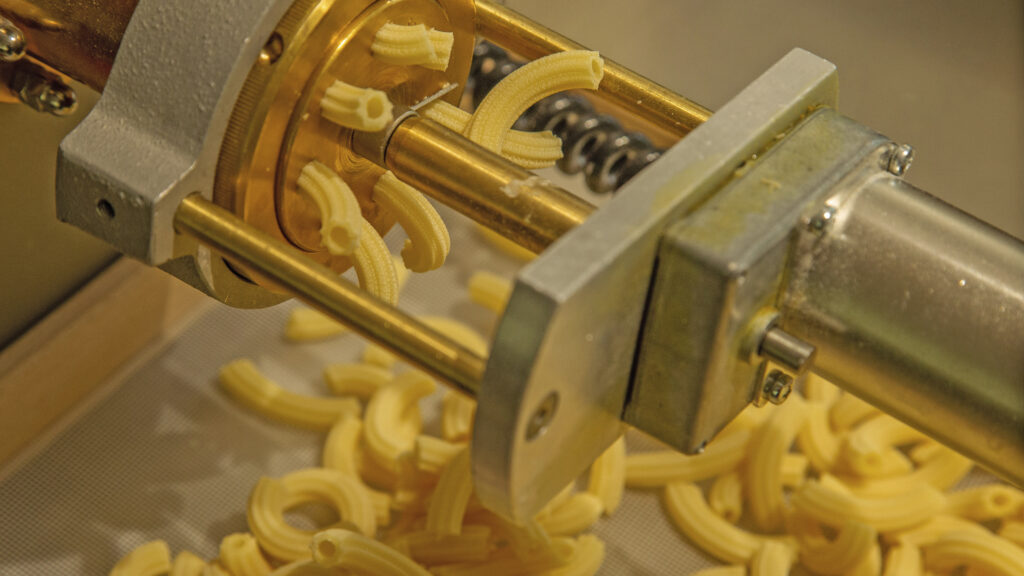
If your pasta isn’t checking those boxes, use the troubleshooting guide below.
Dough Too Dry?
Signs
- Pasta exits with overly rough edges
- Extrusion becomes inconsistent
- Dough struggles to feed properly
- Excessive cracking or breakage
Solution
Add water or egg 5–10 grams at a time and remix thoroughly for at least 5 minutes before evaluating the dough again.
Small adjustments are often all that’s needed. Avoid making large hydration changes at once.
Dough Too Wet?
Signs
- Pasta appears shiny
- Shapes collapse after extrusion
- Product sticks together
- Surface texture becomes soft or undefined
Solution
Add additional flour and continue mixing until the dough returns to a crumbly, sand-like consistency.
Allow the dough to mix thoroughly before deciding if additional flour is needed.
Drying & Storage Best Practices
Once pasta leaves the extruder, proper drying and storage become just as important as flour selection and hydration.

Drying time can vary based on:
- Pasta shape and size
- Room temperature
- Humidity levels
- Air circulation
Smaller shapes will dry more quickly, while larger or longer shapes may require additional drying time.
The goal is to remove excess surface moisture without causing the pasta to become brittle.
For water-based doughs: Air drying on open screens or drying racks is typically the best method. Proper airflow allows the pasta to dry evenly while preserving its shape and texture.
For egg-based doughs: Flash freezing can be an excellent option. Freezing helps preserve freshness, prevents sticking, and allows you to prepare pasta in advance for service.
Storing Fresh Extruded Pasta
For short-term storage:
- Allow the pasta to air dry until the surface is no longer tacky.
- Store under refrigeration.
- Use within several days for optimal quality.
For longer-term storage:
- Dry the pasta thoroughly before packaging.
- Store in an airtight container or sealed bag.
- Keep in a cool, dry environment away from direct sunlight and humidity.
Shelf-Life Guidelines
Water-Based Extruded Pasta
When properly dried and stored in an airtight container, pasta can maintain quality for approximately 2–3 months.
Egg-Based Extruded Pasta
For best results, store in the freezer.
Properly frozen pasta can maintain quality for approximately 2–3 months.
As with any fresh or dried product, shelf life will vary based on drying conditions, packaging, storage environment, and food safety procedures.
A Final Tip
If pasta sticks together during storage, it likely needed additional drying time.
If it cracks or becomes brittle, it may have dried too quickly or too long.
Finding the right balance between hydration, extrusion, drying, and storage is what ultimately leads to consistent, professional-quality pasta every time.